The popularity of Reiki is on the rise, extending beyond the realm of the “spiritual” community. Numerous cities now boast dedicated Reiki centers and hospitals increasingly feature Reiki practitioners supporting patients.
But does Reiki truly deliver tangible benefits? In this article, we’ll explore the documented benefits researchers are uncovering. Whether you’re a seasoned enthusiast or curious about alternative therapies, the secrets of Reiki await exploration.
- What is Reiki?
- What Are the Benefits of Reiki?
- Does Distance Reiki Work?
- Who Might Want to Try Reiki?
- What to Expect in a Reiki Session
- Takeaway
- References
What is Reiki?
The term “Reiki” comes from Japanese and means vital force, honoring the vital energy within us. The belief is that living beings have crucial energy fields for health, and energy blocks can lead to health issues and unfavorable life circumstances.
During a Reiki session, practitioners act as a conduit of life force. Energy flows through the practitioner’s hands to you. Reiki is considered an “intelligent energy” and will go where needed in the amount needed.
Biofield Energy
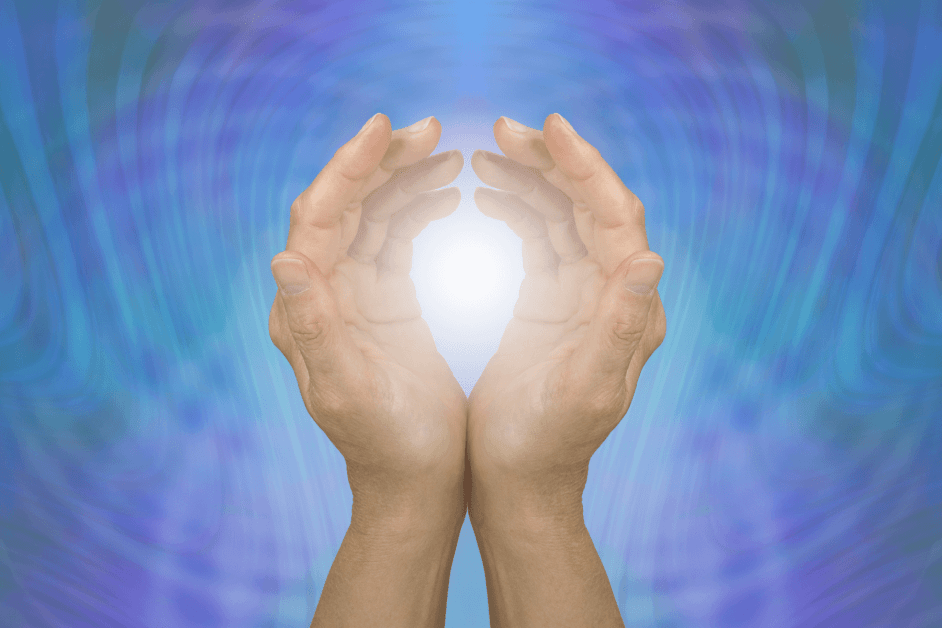
Western medicine considers Reiki to be complementary or alternative medicine in biofield energy. Your biofield consists of the electrical and magnetic fields that you produce1. You can imagine it as tiny electrical and magnetic parts moving around your body.
Healthcare professionals routinely measure these biofields. For example, The heart makes a special kind of electricity to keep beating regularly and is measured with a test called an ECG or EKG. Your brain also produces electricity but at a lower level.
In fact, every cell in your body produces tiny amounts of electricity. The outside of a cell has a positive charge, and the inside has a negative charge.
Doctors use your magnetic field to examine your soft tissue with MRIs (magnetic resonance imaging). This technique utilizes the body’s magnetic field and radio waves to create precise images of internal soft tissues, such as muscles.
In the 1990s, Dr. John Zimmerman used a unique device to detect a healing energy field from people’s hands. Later, a Japanese team found similar results with yoga and meditation practitioners1.
While no theory thoroughly explains how Reiki works, quantum physics may help explain it. Quantum physics explores the behaviors of tiny particles, revealing their intriguing ability to exist in multiple locations simultaneously.
According to quantum physics, practitioners can collect and guide biofield energy to the recipient. Scientists have found that tiny particles can respond to our thoughts, similar to how healing therapies like Reiki work1.
What Are the Benefits of Reiki?
While the benefits of Reiki are potentially infinite and likely impossible to fully document, we’ll stick to the ones explored by research.
Pain and Anxiety
Reiki shows promise in its ability to reduce pain and anxiety in post-operative care, cancer, and in older adults. Anxiety can make pain and recovery more challenging in the clinical setting by worsening pain through fear and worry2.
A meta-analysis of four studies, including 212 participants, investigated the effect of Reiki on pain level. Participants included cancer patients and women just after giving birth, including via cesarean. Overall, those undergoing complimentary Reiki treatment with medical care reported a significantly lower pain score than those without3.
Another study explored the effectiveness of Reiki on pain and anxiety in 122 women. Participants’ pain and anxiety ranged from one to ten, with a mean of 5.42 in pain before Reiki sessions and 2.35 in anxiety. After receiving Reiki, both pain and anxiety decreased by two points, on average. Overall4:
- 92% of women reported decreased pain
- 96% of women reported reduced anxiety
- 91% said the effects lingered after the Reiki session, although the time period was not specified.
Another extensive review of 12 studies included 328 cancer, post-surgical, and older adults as participants. While overall, Reiki reduced pain and anxiety, results varied depending on the situation1.
The most significant reduction in pain was in older adults and the smallest in cancer patients. The most significant drop in anxiety was also in older adults and the smallest in women undergoing breast biopsies1.
Stress

Reiki shows promise in alleviating stress among caregivers of cancer patients. In a six-week study, 42 participants received either 45 minutes of genuine Reiki or a placebo (“sham” Reiki) daily. Researchers assessed stress levels through salivary cortisol levels, blood pressure, pulse rate, and caregiver strain5.
Reiki recipients experienced reduced caregiver strain, lower blood pressure, and pulse rates but no change in cortisol levels. The benefits extended beyond the caregivers, with reports of decreased conflict with their patients5.
A more recent study investigated the effects of Reiki on stress and anxiety during the COVID-19 pandemic. Twenty-eight participants received six Reiki sessions over three weeks. Those receiving Reiki experienced6:
- Decreased distress (negative stress)
- Decreased anxiety
- Increased eustress (positive stress – generally from exciting experiences, like the anticipation before a presentation or a challenge)
While these studies show serious promise, researchers note the need for more extensive studies with standardized treatment protocols.
Does Distance Reiki Work?
Reiki practitioners can give Reiki from a distance when they reach level two. We’re not only talking about not being in the same room. You likely don’t even need to be in the same country or on the same continent.
To comprehend how this is possible, we turn to quantum physics again. According to quantum physics, energy particles can exist simultaneously at the Reiki practitioner’s and recipient’s locations, believed to be facilitated by the practitioner’s intention1.
Researchers explored the effectiveness of distance Reiki during the COVID-19 pandemic. Twenty-five participants experiencing stress and anxiety received Reiki while on video conference twice for 30 minutes7.
Most participants reported feeling a sense of calm and more peaceful during the Reiki session. Based on survey responses, there was a significant reduction in stress and anxiety after Reiki compared to before the sessions7.
Another study focused on distance Reiki during the pandemic focused on healthcare professionals. Seventy-nine individuals, including doctors, nurses, and paramedics, received Reiki remotely for 20 minutes daily for four days8.
Pre and post-tests measured stress, anxiety, pain, wellbeing, and sleep quality. Those receiving distance Reiki showed significantly8:
- Less stress and anxiety
- Less pain
- Improved sleep quality
- Better overall wellbeing
Another controlled study explored the effects of distance Reiki on 18 hospitalized cancer patients. Patients received distance Reiki for 30 minutes daily for five days. Those who received distant Reiki had significantly less fatigue, pain, and stress9.
Who Might Want to Try Reiki?
Reiki is suitable for everyone at any time. With no known risks, you don’t have anything to lose. At the very least, you’ll enjoy a few moments of dedicated relaxation, free from any other demands.
What to Expect in a Reiki Session

Reiki sessions typically last from 30 to 90 minutes. Generally, you lie down, but you can also sit or be in any position that makes you most comfortable.
The Reiki practitioner will begin with their hands at the top of your head and slowly move through your chakra points. They may stay longer at some places than others.
You can expect warmth, tingling, heaviness, or even cooling sensations as your body releases energy. There is no correct way to experience Reiki, and it doesn’t feel the same with each practitioner.
You’ll likely feel calm, at peace, or lighter at the end of the session. It’s also totally normal and okay if you feel nothing at all. Not everyone feels what is happening during a Reiki session. Each person has a different sensitivity level.
As a Reiki practitioner, the most successful sessions are those when someone comes with an open mind and willingness. If you’re curious, try it out. Consider trying at least two sessions. The first session can help you overcome initial hesitations and open you up to receiving the energy.
Takeaway
While the exact mechanisms remain elusive, and there’s a need for more extensive, standardized studies, the documented benefits suggest a promising avenue if you’re seeking holistic wellbeing.
If you feel drawn to Reiki, try it. There’s nothing to lose, and you just might find a unique way to nurture your wellbeing and explore new dimensions.
About the Author
Meg Savané, founder of HolistiSci, has a BA in psychology from Denison University and a JD from Florida International University College of Law. She is also a reiki master and advanced pranic healer. Her passion for natural health began in 2008 when she healed her chronic disease holistically through diet and supplements. Since then, she made it her mission to become an expert on healing her body and maintaining her health naturally. It brings her joy to dig deep into science and make content accessible to others.
References
1. Thrane S, Cohen SM. Effect of Reiki therapy on pain and anxiety in adults: an in-depth literature review of randomized trials with effect size calculations. Pain Manag Nurs. 2014 Dec;15(4):897-908. doi: 10.1016/j.pmn.2013.07.008. Epub 2014 Feb 28. PMID: 24582620; PMCID: PMC4147026.
2. Woo AK. Depression and Anxiety in Pain. Rev Pain. 2010 Mar;4(1):8-12. doi: 10.1177/204946371000400103. PMID: 26527193; PMCID: PMC4590059.
3. Demir Doğan M. The effect of reiki on pain: A meta-analysis. Complement Ther Clin Pract. 2018 May;31:384-387. doi: 10.1016/j.ctcp.2018.02.020. Epub 2018 Mar 10. Erratum in: Complement Ther Clin Pract. 2021 Aug;44:101423. PMID: 29551623.
4. Bondi, A., Morgan, T., & Fowler, S. B. (2020). Effects of Reiki on Pain and Anxiety in Women Hospitalized for Obstetrical- and Gynecological-Related Conditions. Journal of Holistic Nursing. https://doi.org/10.1177/0898010120936437
5. Özcan Yüce, U., & Taşcı, S. (2021). Effect of Reiki on the stress level of caregivers of patients with cancer: Qualitative and single-blind randomized controlled trial. Complementary Therapies in Medicine, 58, 102708. https://doi.org/10.1016/j.ctim.2021.102708
6. Gálvez Escudero D, Reyes-Bossio M. Stress and Anxiety Reduction Effects of a Reiki Program During the COVID-19 Pandemic Among Employees in Lima, Peru. Holist Nurs Pract. 2022 Sep-Oct 01;36(5):E48-E56. doi: 10.1097/HNP.0000000000000545. PMID: 35981119; PMCID: PMC9377362.
7.DiBenedetto J. Experiences With a Distant Reiki Intervention During the COVID-19 Pandemic Using the Science of Unitary Human Beings Framework. ANS Adv Nurs Sci. 2022 Oct-Dec 01;45(4):E145-E160. doi: 10.1097/ANS.0000000000000441. PMID: 36308730; PMCID: PMC9622335.
8. Dyer, N. L., Baldwin, A. L., Pharo, R., & Gray, F. (2023). Evaluation of a Distance Reiki Program for Frontline Healthcare Workers’ Health-Related Quality of Life During the COVID-19 Pandemic. Global Advances in Integrative Medicine and Health. https://doi.org/10.1177_27536130231187368
9. Demir M, Can G, Kelam A, Aydıner A. Effects of Distant Reiki On Pain, Anxiety and Fatigue in Oncology Patients in Turkey: A Pilot Study. Asian Pac J Cancer Prev. 2015;16(12):4859-62. doi: 10.7314/apjcp.2015.16.12.4859. PMID: 26163604.
You May Also Like…

let go
Oh Angels above, how you shower your love down upon us all. Even those who are hardened cannot resist lifting their heads to allow your…
Keep reading
Where to Begin
There are some moments in life that are so overwhelming that you don’t even know where to begin to process what’s happening. Start with the…
Keep reading
Finding The Answer
Oh soul, you have so much wisdom to share. It’s only but a moment of silence that allows me to tap into you and discover…
Keep reading
 HolistiSci
Leave a comment